
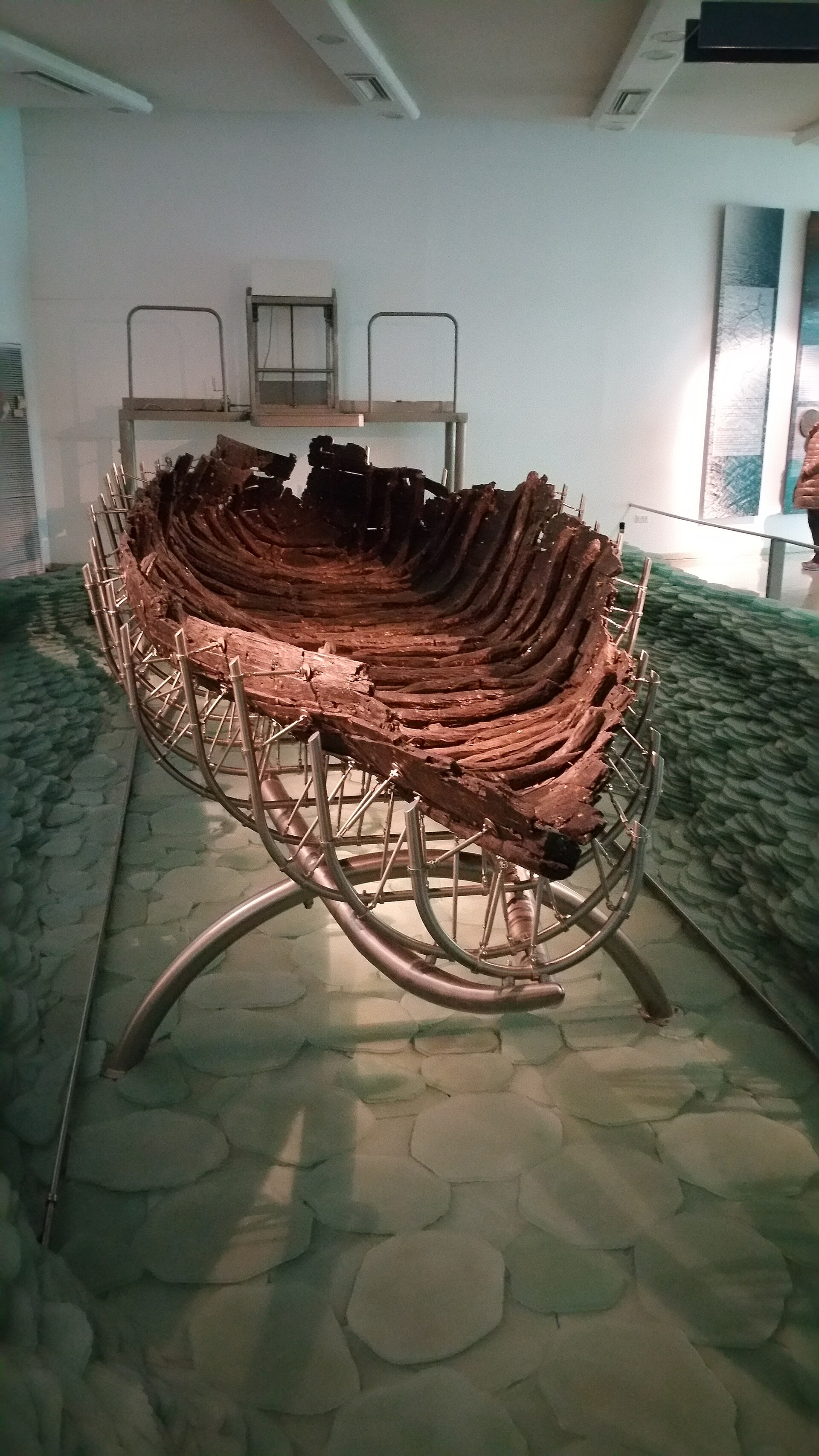
In 1986, a drought dropped the water level of the Sea of Galilee far enough to expose part of the lakebed that is normally submerged. Two brothers walking the newly uncovered shoreline on the north-western side spotted the outline of something buried in the mud.
It was a boat.
Careful excavation recovered a fishing vessel roughly eight metres long. Carbon dating placed it in the first century AD — the century in which Jesus lived, taught, and called fishermen from these exact waters to follow Him.
The construction tells its own story. The boat was built and repaired using twelve different types of wood. That is not the mark of a wealthy owner with a shipwright on retainer. It is the mark of a working vessel patched again and again over many years with whatever timber came to hand — an ordinary boat, belonging to ordinary men, kept in service far past the point where anyone with money would have replaced it.
It matches the descriptions left by the Jewish historian Josephus, who wrote about the fishing fleets working this lake in exactly this period.
And it puts a physical object behind scenes that most readers picture only vaguely. Luke 5:3 records Jesus teaching the crowds from a boat pushed out a little from the shore, using the water to carry His voice. Mark 4:39 records Him asleep in a boat during a storm violent enough to terrify professional fishermen, then standing and stilling it. Luke 5:6 records the catch so large the nets began to break.
The recovered vessel could carry around thirteen people. Jesus and the Twelve.
Whether this particular boat ever carried Him is something no one can prove. What is beyond question is that it is the same type of boat, from the same decades, working the same water, crewed by the same kind of men. When the Gospels describe Jesus stepping into a fishing boat on the Sea of Galilee, this is what they are describing.
It sat preserved in the mud for two thousand years, and a drought brought it back.
The 2,000-year-old Galilee boat, Yigal Allon Museum. Photo: Konrad Summers from Santa Clarita (Valencia) , California, USA, CC BY-SA 2.0, via Wikimedia Commons.