
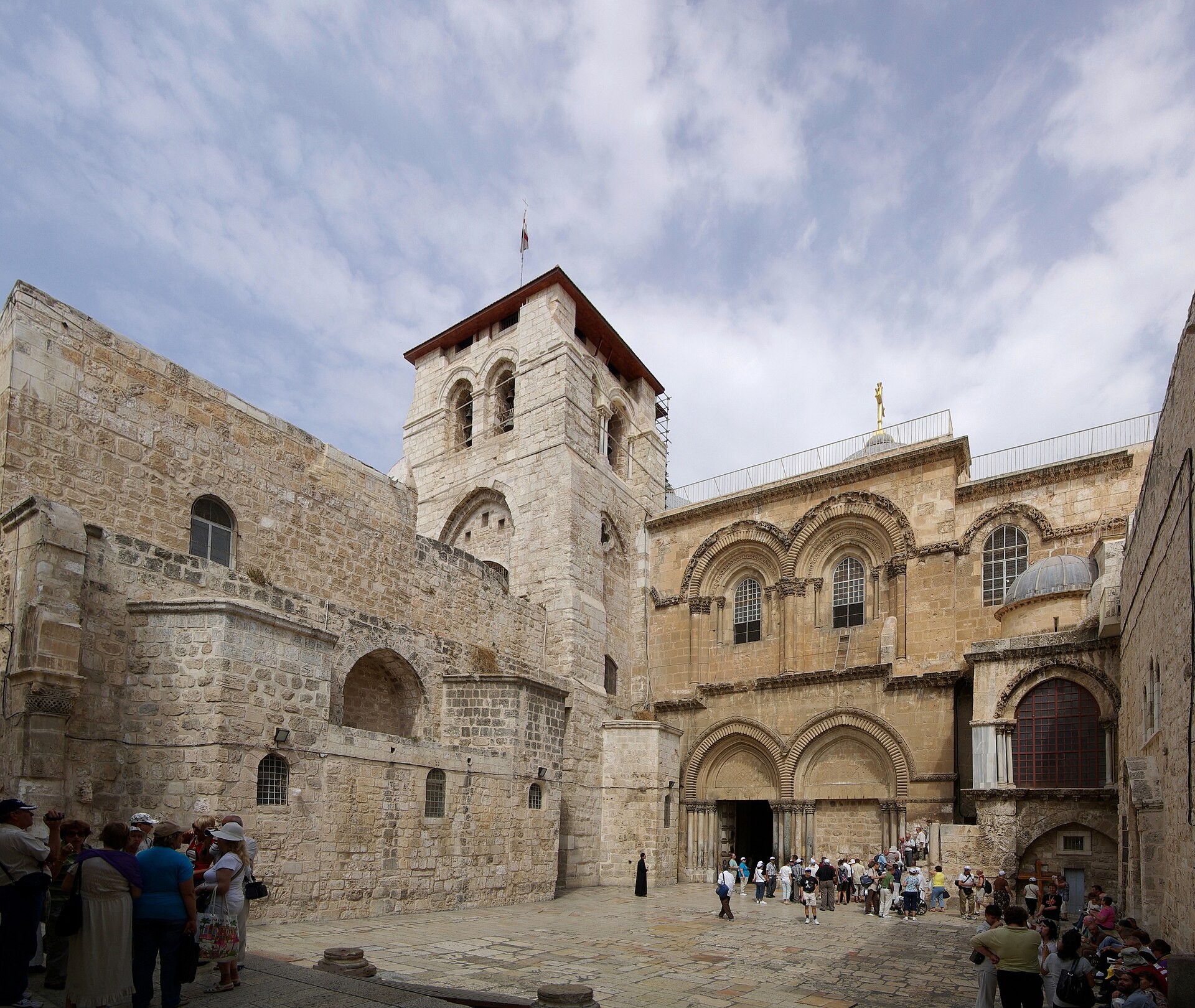
John 19:41 contains a detail that is easy to read past: "Now in the place where he was crucified there was a garden; and in the garden a new sepulchre."
A garden. Near the place of crucifixion. Containing a new tomb.
For years, that detail was used as an argument against the traditional site. The Church of the Holy Sepulchre had been venerated as the location of the crucifixion and burial since the fourth century, but it sits today inside a dense urban quarter of Jerusalem's Old City. Whatever it looks like, it does not look like a garden. No garden had ever been found there, and critics pointed to that absence as evidence the tradition had simply picked the wrong spot.
Excavation beneath the church has now answered that objection.
Archaeologists working under the building have identified ancient soil layers, plant remains, and a water system — the physical signature of cultivated ground. Two thousand years ago, this location was exactly what John described. A garden.
That was the missing piece, and it completes a picture that was already substantial.
The site contains tombs cut from the rock dating to the time of Christ — so it was in use as a burial place in the right period. It sits outside the line of the old city walls, matching the requirement that executions and burials took place beyond the city proper; the walls were extended later, which is why the site now sits inside the modern Old City. And it has been identified and honoured by Christians continuously since the 300s, a chain of memory reaching back to within a few generations of the events themselves.
Now add cultivated first-century soil to that list.
Every element John records — outside the walls, a garden, a new tomb cut in rock, all in immediate proximity — is present at this one location.
This is the ground where Jesus died, where He was buried, and from which He rose. The tradition held for seventeen centuries. The soil beneath the church has now confirmed it.
The Church of the Holy Sepulchre, Jerusalem. Photo: Berthold Werner, CC BY-SA 3.0, via Wikimedia Commons.