
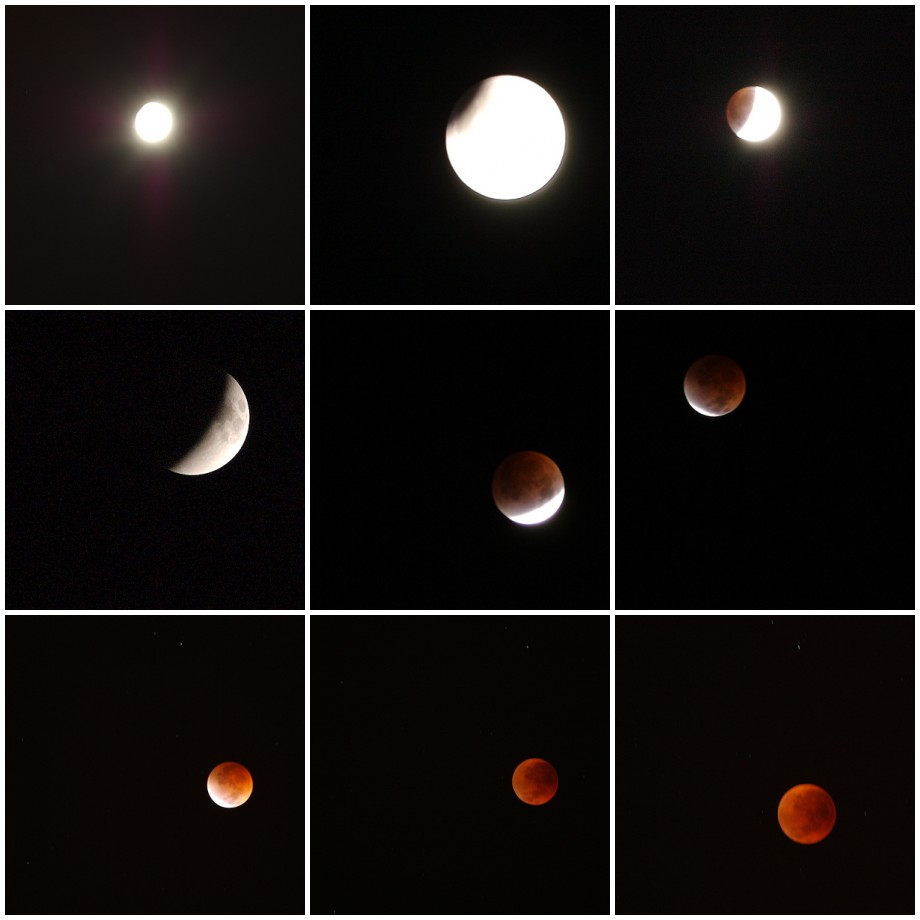
Astronomy has a quality that few historical disciplines can match: it runs backwards with precision. The mechanics of orbital motion are so well understood that the position of the earth, sun and moon can be calculated for any date in the past, and the result is not an estimate. It is arithmetic.
Run that calculation over the first century and something remarkable appears.
A lunar eclipse — a blood moon — occurred on 3 April, AD 33, and it was visible from Jerusalem.
That date is widely held to be the date of the crucifixion.
Set the Gospel accounts beside it. Luke 23:44-45 records that darkness covered the land from the sixth hour to the ninth — noon until three in the afternoon — while Jesus hung on the cross. Readers have long understood that darkness as supernatural, and it must be: a solar eclipse is physically impossible at Passover, which falls at full moon, when the moon is on the opposite side of the earth from the sun.
Then comes the second detail. In Acts 2:20, preaching to the crowd at Pentecost just weeks later, Peter quotes the prophet Joel: the sun shall be turned into darkness, and the moon into blood, before the great and notable day of the Lord.
Peter was addressing people who had been in Jerusalem for Passover. He was not describing something they would have to take on faith. He was pointing at something they had seen with their own eyes — and telling them what it meant.
NASA's historical eclipse records confirm that on the evening of that day, the moon rising over Jerusalem was in eclipse. Red.
Darkness at midday, recorded by Luke. A blood moon that evening, invoked by Peter. And modern orbital calculation placing exactly that eclipse over exactly that city on exactly that date.
The sky did what Scripture says it did, and the mathematics of the solar system can now be run back two thousand years to prove it.
A total lunar eclipse. Photo: Beatrice Murch from Buenos Aires, Argentina, CC BY 2.0, via Wikimedia Commons.