
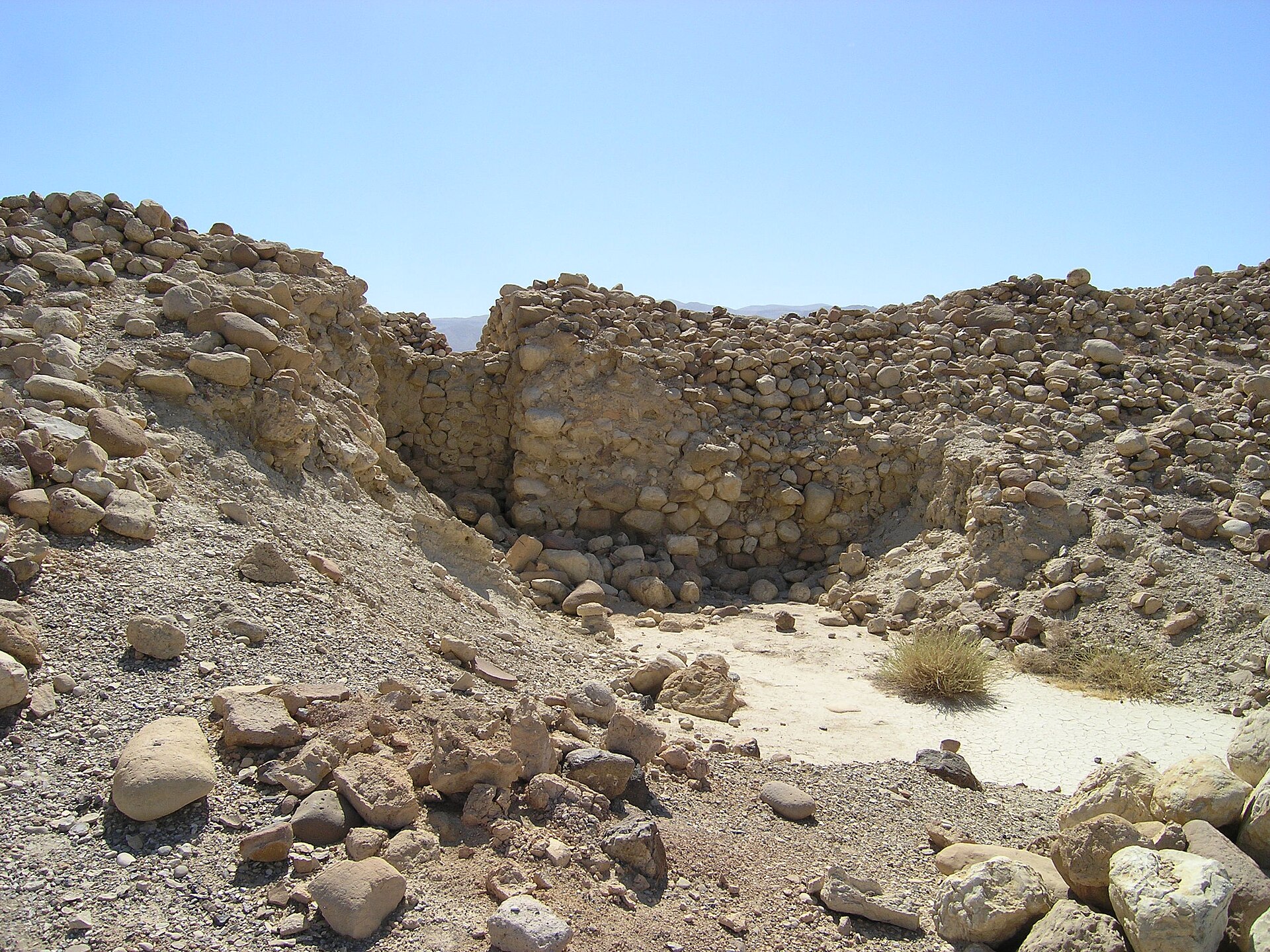
Genesis 19 records that the Lord rained brimstone and fire on Sodom and Gomorrah, and overthrew those cities and all the plain.
Near the Dead Sea there is a site believed to match that account, investigated by the explorer Ron Wyatt.
What the site contains is ash-covered ruins — formations that retain the shape of ancient buildings, walls and structures still discernible, but reduced to a chalky white-grey material throughout. Not buildings that burned and collapsed, but buildings that appear to have been incinerated by intense heat while standing, leaving the architecture legible in ash.
Embedded in that ash are sulfur balls.
These are the part that defies ordinary explanation. They are spheres of sulfur, and their composition is extraordinary: over 90% pure sulfur. Naturally occurring sulfur deposits do not look like this. Sulfur in nature is mixed — it forms in combination with other minerals, typically running well below fifty per cent purity. Sulfur at over ninety per cent, formed into balls, is not something the natural world produces.
They are also found inside the ash layers, not scattered on the surface. They fell into the material as it burned, or they burned with it.
The obvious alternative explanation has been examined and ruled out. There is no volcanic activity in this region that could account for them, and the chemical makeup of the sulfur indicates it is not native to the area. It did not come from the ground here. It came from above.
There is a final detail that is easy to overlook. Local people in the region have long known of these sites, and some still refer to them by the names recorded in the biblical account — a thread of local memory running back to the event itself.
Ash-formed ruins holding the shape of buildings. Sulfur of impossible purity embedded through them. No volcanic source. And a local name that never changed.
Brimstone and fire, exactly as Genesis describes.
Bab edh-Dhra, a Dead Sea site proposed as Sodom. Photo: Ana al'ain, CC BY-SA 3.0, via Wikimedia Commons.