
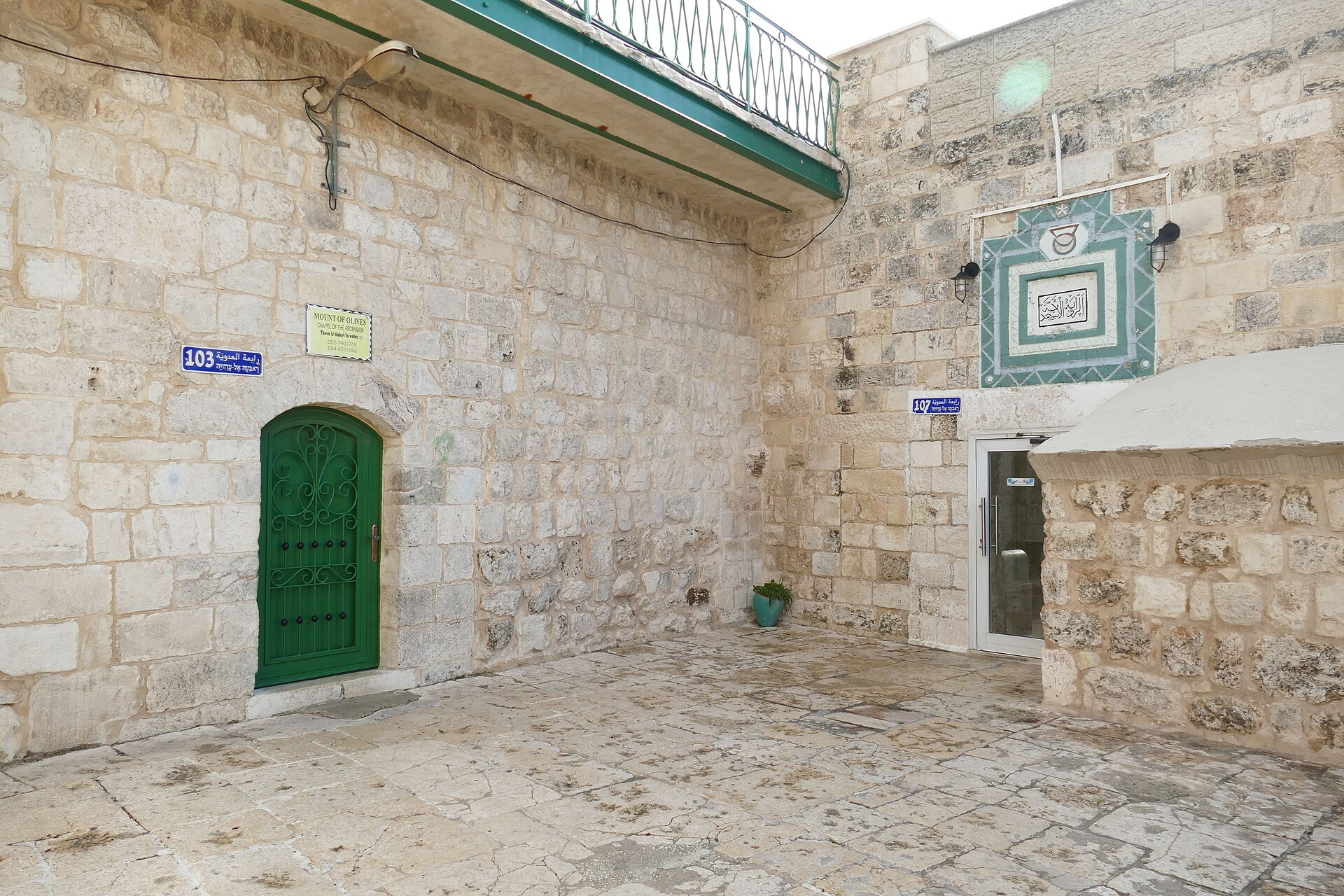
At the summit of the Mount of Olives in Jerusalem there is a flat slab of stone. It is called the Ascension Rock, and tradition holds it as the exact place from which Jesus ascended into heaven.
The account is given twice. Luke 24:50-51 records that He led the disciples out as far as Bethany, lifted up His hands and blessed them, and while He blessed them was parted from them and carried up into heaven. Acts 1:9-12 gives the fuller version — the cloud receiving Him out of their sight, the two men in white asking why they stand gazing up, and the promise that He will return in the same way. Acts then names the location precisely: the disciples returned to Jerusalem from the mount called Olivet.
The stone bears a distinct footprint — an impression in the rock held to be the mark of Jesus's right foot as He rose.
The site has been venerated for centuries. A chapel was built over it to mark its significance, and pilgrims travel from around the world to stand at it. The structure is small and unadorned, sheltering the stone itself rather than displaying it.
There is a further weight to the place, and it comes from the same passage. The two men in white told the disciples that this same Jesus would return in like manner as they had seen Him go. Zechariah 14:4 names the location of that return directly: His feet shall stand in that day upon the Mount of Olives.
Which makes this summit unusual among holy sites. Most mark something that happened. This one marks something that happened and something that is still to come — the place He left from, and the place Scripture says He will set His feet again.
A flat stone at the top of the Mount of Olives, sheltered by a chapel, carrying a footprint. The last place on earth Jesus stood, and the place He is coming back to.
The Chapel of the Ascension, Mount of Olives, Jerusalem. Photo: Bukvoed, CC BY 4.0, via Wikimedia Commons.