
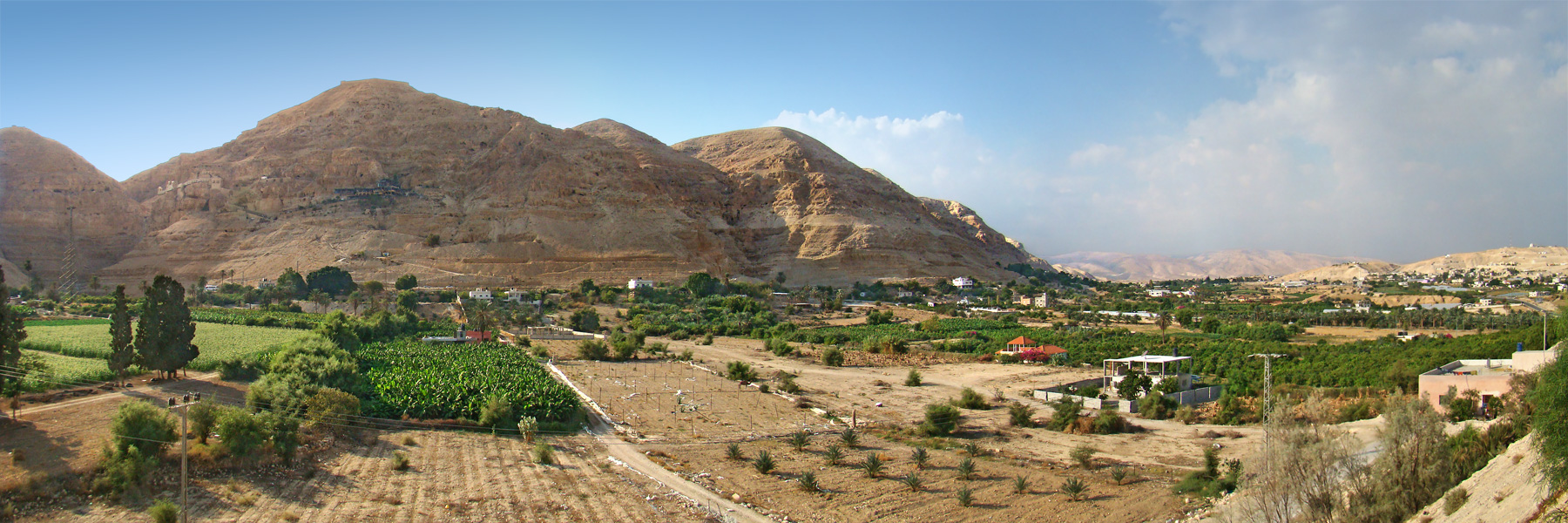
Above Jericho, in the Judean Desert, a mountain rises steeply from the valley floor. It is known as the Mount of Temptation, and it is held to be the place where Jesus fasted for forty days and was tempted by Satan.
Matthew 4 records the account. Jesus is led into the wilderness by the Spirit, fasts forty days and forty nights, and afterwards is hungry. The tempter comes to Him with three temptations — stones into bread, the pinnacle of the Temple, and all the kingdoms of the world. Each is answered from Scripture. Each is refused.
The identification of this mountain is not a late tradition. Early Christians marked this location as far back as the fourth century, placing the memory within a few generations of the church's earliest written records.
The name carries the account inside it. The mountain is also called Quarantania, from the Latin quaranta — forty. The number of days is built into what the place is called, and has been for centuries.
Today a Greek Orthodox monastery clings to the cliff face partway up, built directly into the rock. It marks the cave identified as the place where Jesus stayed during the fast. The construction is remarkable in itself — a working monastery suspended on a sheer desert cliff, reached by a steep path from the valley.
Standing below it, the geography does something the text alone cannot. This is genuine wilderness — bare rock, no shade, no water, brutal heat. Jericho sits below in green contrast, one of the oldest inhabited places on earth, with its springs and its palms visible from the slope.
Forty days without food, on that rock, in that heat, with the fertile valley in plain sight the entire time. Then a voice suggesting He turn stones into bread.
The mountain above Jericho is where that took place, and Christians have been pointing to it for more than sixteen hundred years.
The Mount of Temptation above Jericho. Photo: Tango7174, CC BY-SA 4.0, via Wikimedia Commons.