
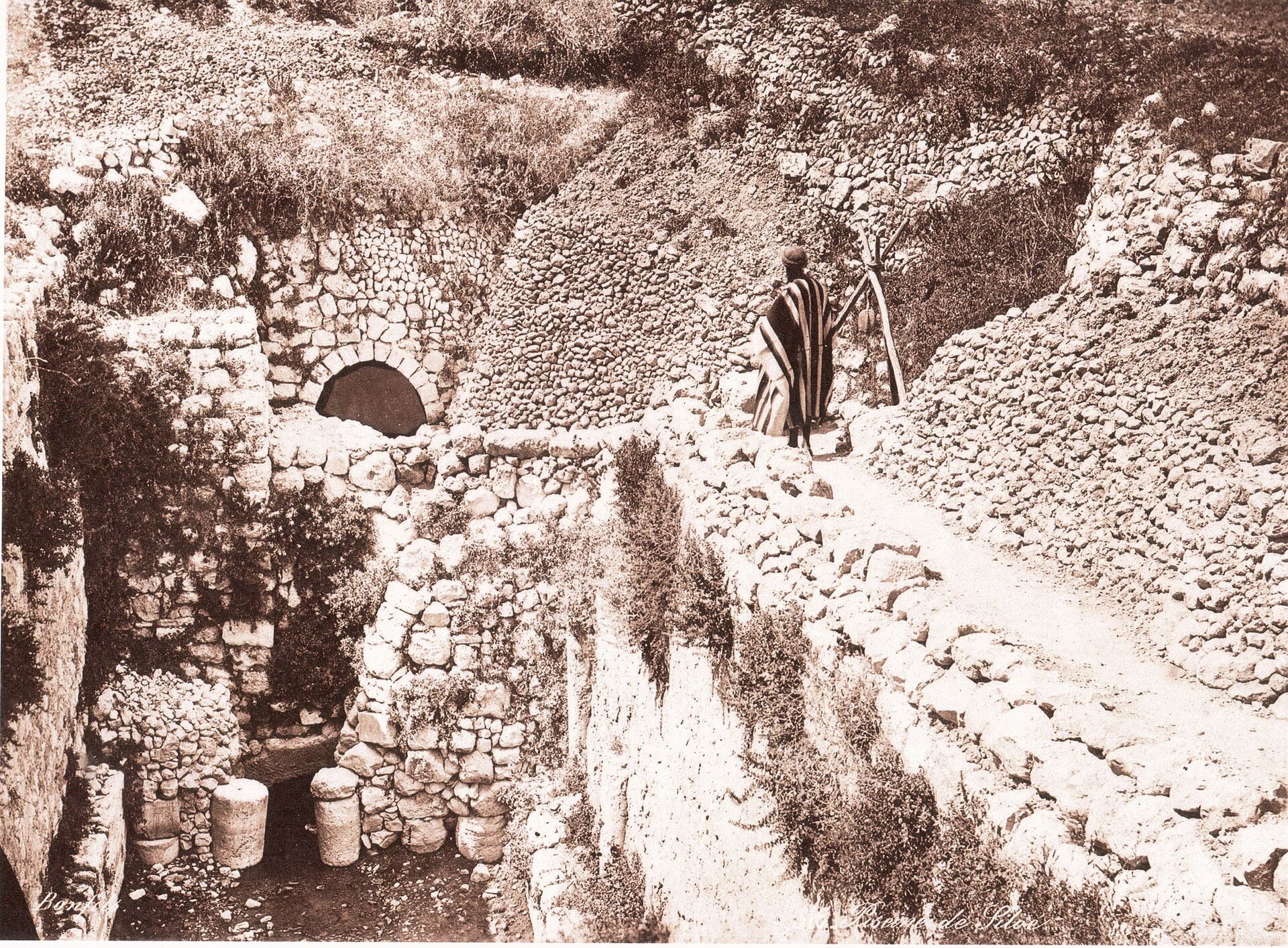
In John 9, Jesus encounters a man blind from birth. He makes clay, applies it to the man's eyes, and sends him to wash in the Pool of Siloam. The man goes, washes, and returns seeing.
For most of modern history, nobody was certain where that pool had been.
Then in 2004, a repair crew working on a damaged sewer line in Jerusalem cut into something they were not looking for. Stone steps.
What emerged from that excavation was a monumental pool — broad stepped courses descending to the water, associated channels, and a layout entirely consistent with first-century Jerusalem. Not a modest basin, but a substantial public structure built to handle crowds.
The history behind it runs deeper still. The water system was originally constructed during the reign of King Hezekiah in the eighth century BC, when Jerusalem faced an Assyrian siege and the city's water supply — the Gihon Spring — lay outside the walls and would have handed the besiegers the means to starve the city out. Hezekiah's solution was to cut a tunnel through solid rock to bring the spring's water inside. Second Kings 20:20 and 2 Chronicles 32:30 both record it.
The pool was later expanded during the Second Temple period, becoming a major site of ritual purification for pilgrims arriving in Jerusalem for the festivals. The Jewish historian Josephus refers to it. Its position beside the ancient City of David, fed by the Gihon Spring, fixes the identification firmly.
Which sharpens the scene in John's Gospel considerably.
This was not a quiet corner. Jesus sent the blind man to the busiest water source in Jerusalem, a place thick with pilgrims performing ritual washing — and the man walked back through those same crowds with his sight restored. The healing happened in the most public place available.
The account in John records real architecture, in a real city, at a location that lay buried and unidentified until a sewer repair uncovered the steps by accident.
The Pool of Siloam, Jerusalem. Public domain, via Wikimedia Commons.