
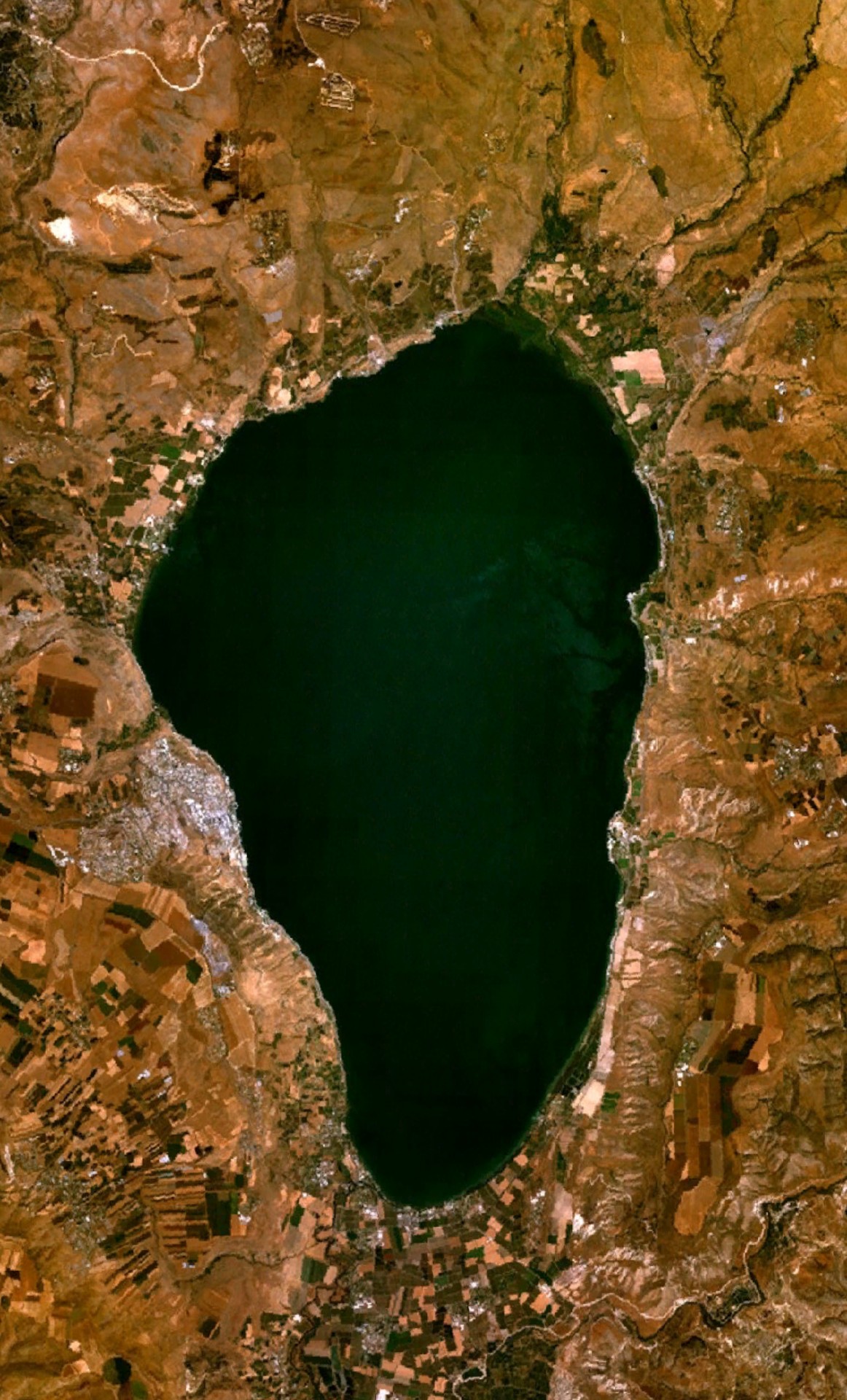
In northern Israel there is a freshwater lake surrounded by hills, ringed by towns whose names run through the Gospels. It is called the Sea of Galilee, and more of Jesus's recorded ministry took place on and around this water than anywhere else.
The setting matters. Nearby stands Capernaum, the town that became His base of operations — where He taught in the synagogue, healed Peter's mother-in-law, and called fishermen from their nets. The shoreline villages sat close enough together that a crowd could gather from several of them in a morning.
It is a working lake. The fishing industry here supported the surrounding towns, and several of the disciples earned their living on this water before they followed Him.
It is also a dangerous one. The lake sits low, surrounded by hills, and cold air dropping through the valleys onto warm water generates violent squalls with very little warning. Fishermen who had worked it their whole lives knew to fear it — which is what gives the Gospel accounts their weight. When experienced men on this lake were terrified by a storm, they had good reason.
This is the water the Gospels record Jesus walking on during such a storm — coming to the disciples in the fourth watch of the night, across the surface, in weather that had them fighting to stay afloat. It is where Peter stepped out of the boat, walked toward Him, saw the wind, and began to sink.
It is where the storm was stilled with a word. Where the great catch filled the nets to breaking. Where He taught from a boat pushed out from the shore so the water would carry His voice to the crowd on the beach.
The lake is still there, still fished, still subject to the same sudden storms. The hills around it have the same shape. The towns are still named in the same places.
You can stand on the shore of the Sea of Galilee and look at the water Jesus walked on.
The Sea of Galilee. Public domain, via Wikimedia Commons.