
In the rocky desert of north-western Saudi Arabia, a boulder sits on top of a hill. It stands over sixty feet tall, and it is split straight down the middle — cleaved into two halves with a channel running between them.
Exodus 17 records that when Israel had no water and the people were ready to turn on Moses, God told him to strike the rock at Horeb, and water would come out of it for the people to drink.
The appearance alone would be a curiosity. What moves it beyond curiosity is the ground around it.
Geologists and researchers examining the site have documented heavy water erosion beneath the rock. The granite at the base is flattened and smoothed — the polish that only sustained running water produces over long periods. Deep runoff channels cut away from the base, carved into the desert floor.
The region receives almost no rainfall.
Erosion of this kind requires enormous volumes of water moving with force over the rock and away from it. Nothing in the present climate can account for it. And the pattern of the channels is the detail that matters most: the erosion appears to radiate outward from the base of the rock itself. The water was not flowing past this boulder. It was flowing from it.
The surrounding area supports the same reading. Researchers have documented stone structures, altars, and ancient petroglyphs across the site — the physical remains of a large encampment. Not a place people passed through, but a place where a substantial number of people stopped, stayed, built, and worshipped.
Which is exactly what Exodus describes. A nation in the desert, desperate for water, camped at a rock. Water from the rock. And the camp remaining there.
A split boulder sixty feet high, water-carved granite beneath it in a place that receives no rain, runoff channels radiating from its base, and the remains of a large encampment surrounding it.
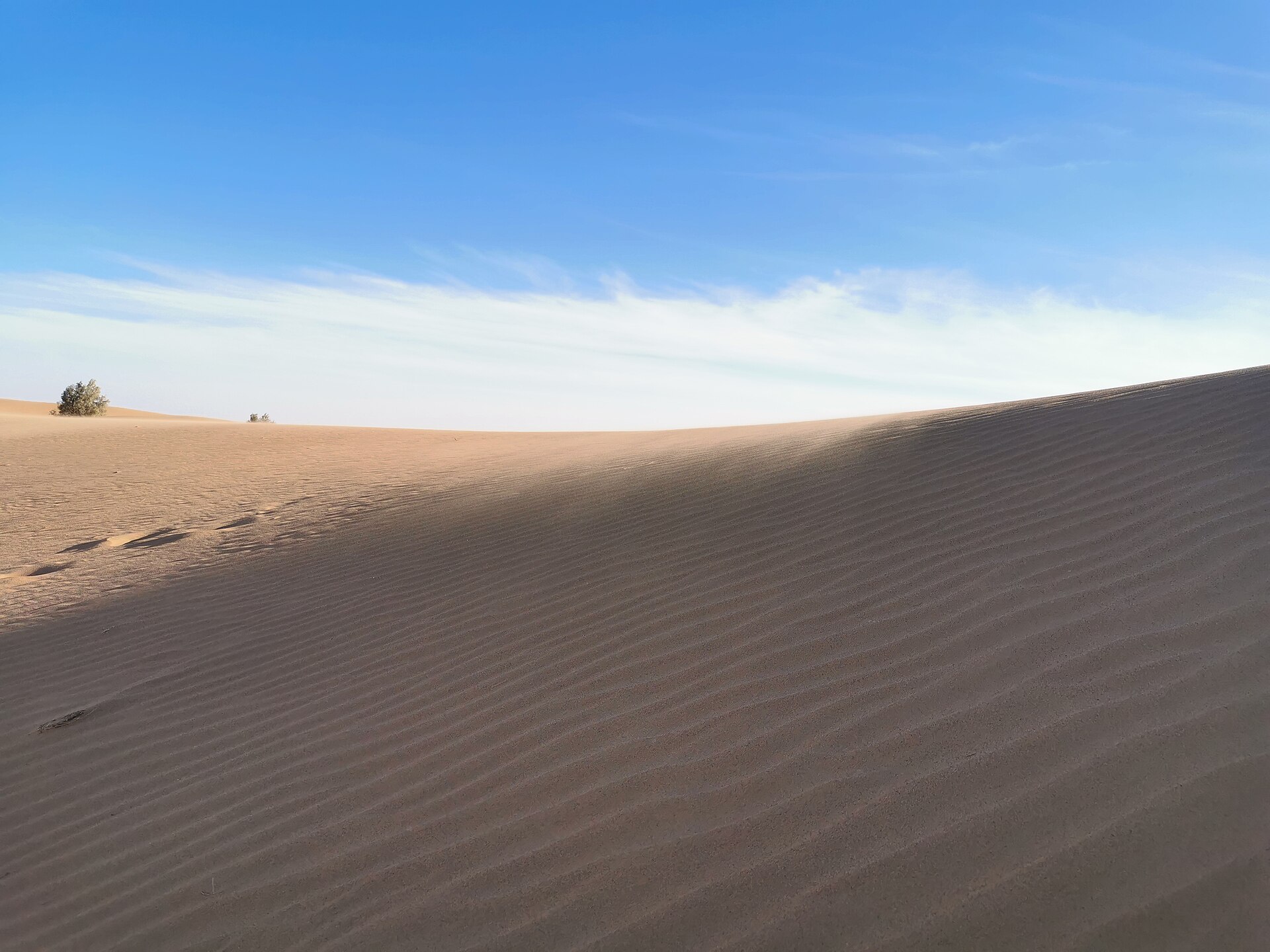
The Tabuk desert, north-western Saudi Arabia. Photo: DanyelODACI, CC BY-SA 4.0, via Wikimedia Commons.