
For most of the twentieth century, sceptics had a favourite argument against the Old Testament. King David, they said, was a legend — a national hero invented centuries after the fact, with no more historical substance than King Arthur. Outside the pages of the Bible, there was not a single mention of him anywhere in the ancient world.
That argument died in 1993.
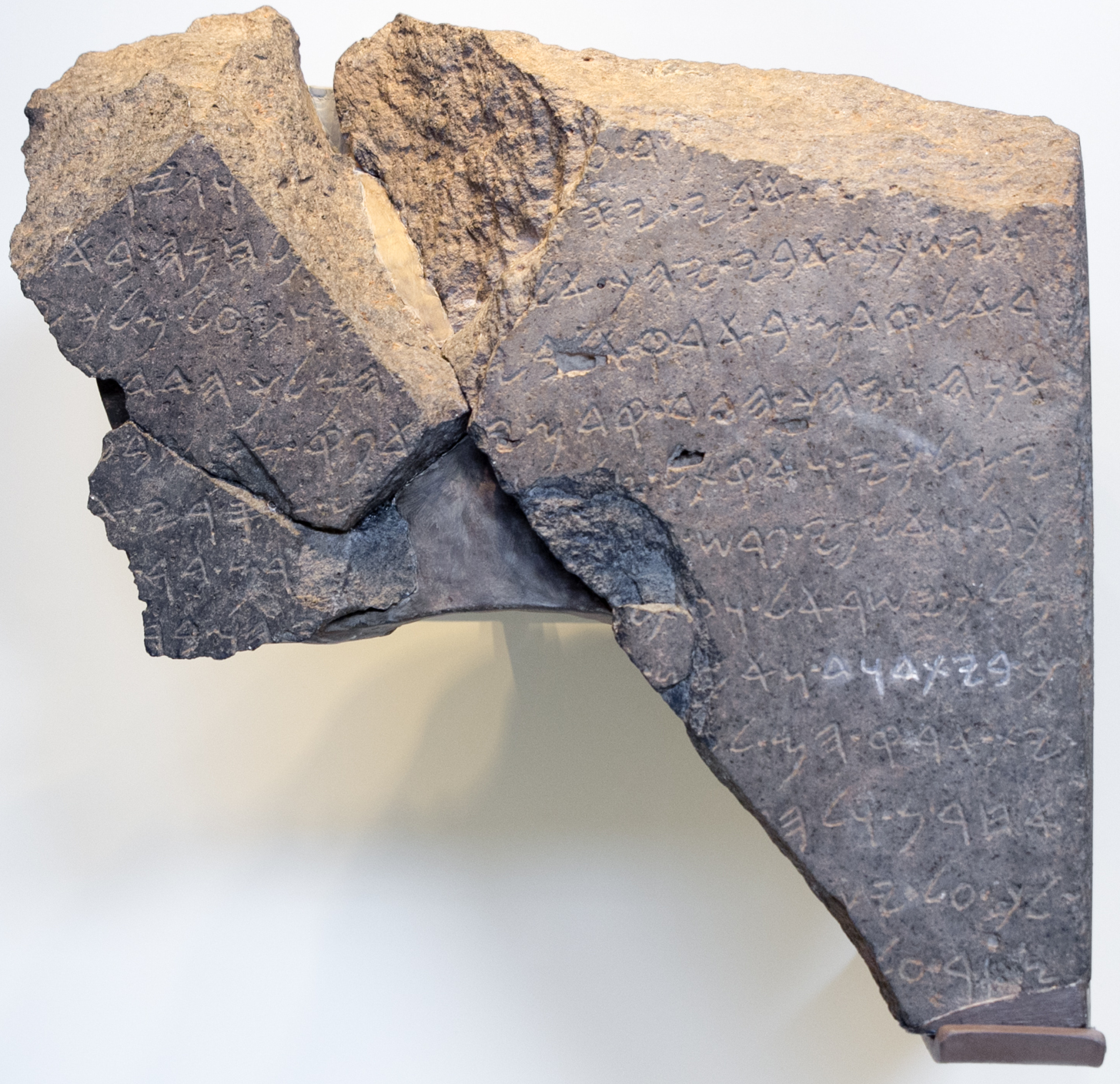
Excavating at Tel Dan in northern Israel, archaeologists pulled a broken basalt slab from the ground carrying an Aramaic inscription from the ninth century BC. It was a victory monument, commissioned by an Aramean king — most likely Hazael of Damascus — boasting of his campaigns against Israel and Judah. Conquerors have always liked to carve their wins in stone, and this one named the enemies he had beaten.
One of those names was the House of David.
The significance is hard to overstate. This is not a Hebrew text. It was not written by Israelites, and it was certainly not written to flatter them. It was carved by an enemy king, in his own language, on his own monument, celebrating his victory over David's dynasty. A hostile foreign power referred to the kingdom of Judah as the house of its founder — exactly as you would expect if that founder had been a real, remembered, historically significant ruler.
You do not name your enemy's royal line after a man who never existed. Dynasties are named for people who actually sat on thrones.
The stele dates to roughly a century and a half after David's reign, close enough that the memory of his line was still the standard way to identify the kingdom he founded. And the inscription's account of conflict between Aram, Israel and Judah sits comfortably alongside the record preserved in the books of Kings.
The Tel Dan Stele did not merely add a footnote to biblical history. It removed the foundation from an entire school of criticism. The scholars who had insisted David was mythological were confronted with his dynasty carved into stone by a king who had every reason to wish it had never existed.
It remains one of the most important archaeological discoveries ever made in relation to Scripture — independent, external, and entirely unfriendly confirmation that the Bible was describing real kings in a real kingdom.
The Tel Dan Stele, Israel Museum. Photo: Oren Rozen, CC BY-SA 4.0, via Wikimedia Commons.